
The Complex Challenges of Integrated Deterrence, China, and Taiwan
Integrated deterrence represents the most complex of challenges in US strategic policy. It can prevail.

Since my early days of university I have thought of US-China relations as the defining issue of our time.
During my time as Australian Ambassador to the United States, I delivered a series of lectures on deterrence — integrating and synthesising US, Chinese and Indo-Pacific perspectives and mapping out where I see the future headed.
I believe they are just as relevant today, and I wanted to share them here with you. KR.
10 April 2024 | US Naval Academy
I was recently in Austin, Texas, and I had the opportunity to spend some time at the LBJ Presidential Library.
I have long been an admirer of LBJ, notwithstanding the difficulties he faced in his political career, particularly in relation to the Vietnam War.
LBJ, however, was a man of courage. And he joins that long line of US Presidents who had worn the uniform of the US Navy before themselves becoming Commander in Chief – JFK, Nixon, Ford, Carter, and HW Bush.
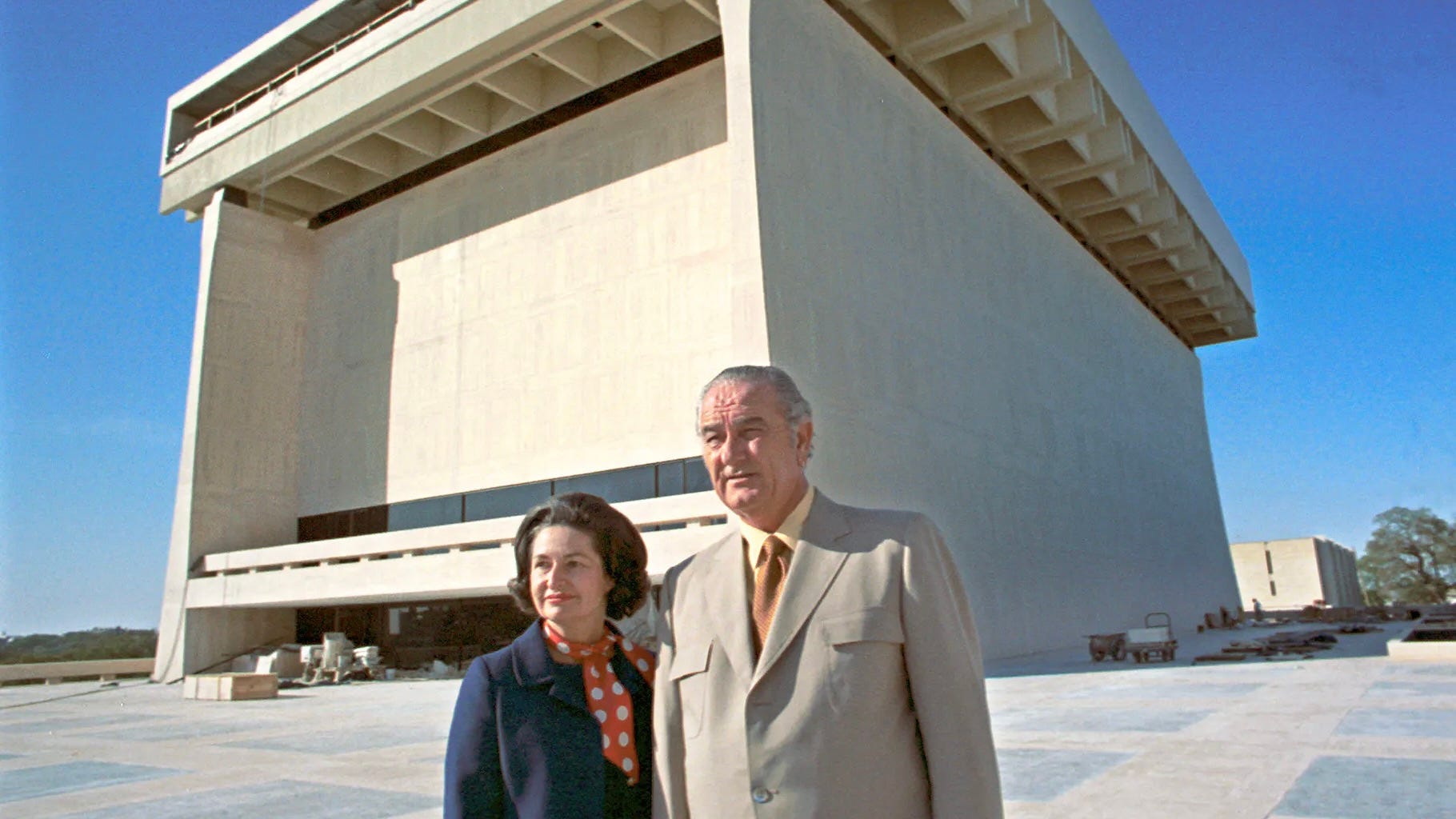
While at the Library, I discovered something of LBJ’s war service record, he having joined the US Naval Reserve in 1940, before enlisting for active duty two days after Pearl Harbor in 1941, then seeing active service in my own country of Australia and in Papua New Guinea.
General Douglas Macarthur found LBJ’s presence at his field headquarters in Brisbane (my own hometown) to be a positive pain in the you-know-where. But he tolerated Johnson, not least because LBJ at that stage had been a long-serving US Congressman from the great state of Texas. And when he heard of LBJ’s participation in reconnaissance flights over enemy-occupied Papua New Guinea when much of the aircraft he was in was blown away, he reversed his tune and promptly awarded LBJ the Silver Star.
I was taken in particular while visiting the Library with a singular, pithy observation by the 36th President taken from his State of the Union in January 1964, who said: “We must be constantly prepared for the worst, and constantly acting for the best. We must be strong enough to win any war and we must be wise enough to prevent one.”
There is something of an old fashioned, almost Lincolnian farm-boy wisdom about LBJ. Because in that single aphorism, from that single reflection, he
sums up the central dilemma that brings us together in this conference today some 60-years later: namely, how to deter a Chinese invasion of Taiwan and how to do so wisely and in a manner which does not provoke Chinese unilateral military action in the first place.
The Importance of Military Dialogue
Thank you, therefore, for inviting me to deliver this lecture to the annual Foreign Affairs Conference of the US Naval Academy.
This is my second time speaking at the Academy.
I have to confess, I’ve also spoken previously to the Army at West Point, as well as at the National Defence University in Washington DC.
I’ve also been privileged to address a range of private gatherings with various arms of the US military and intelligence communities over recent years on many of the complex questions concerning China’s rise.
As a result, over many years now, I have been constantly impressed by the calibre of the US military leadership, those who have occupied distinguished positions from Chair of the Joint Chiefs, the individual service chiefs, and much nearer to home in Australia, the Indo-Pacific Command or, for those of a certain age such as myself, what was once called PACOM.
So, I begin my remarks today by saluting your service as those who proudly wear the uniform of United States Navy, with whom the Royal Australian Navy has been working together, both in peace and in war, over the better part of a century. Or indeed, those of you serving in other militaries from our friends and partners around the world.
For the record, over many years now, I have also spent time in China, speaking to various gatherings of the Chinese military.
As a student of China and Chinese language for nearly 50-years now, I’ve had opportunities to speak at the National Defence University in Beijing, the Xiangshan Forum, as well as the People’s Liberation Army’s Annual Conference on Sun Tzu’s ‘Art of War’ in Qingdao.
I was able to do much of this when we lived in happier political and geo-political times. In more recent years, as you will all understand intimately in this gathering, it has become much more difficult.
Although I have always been of the view that it is much better to talk than not to, particularly in the case of the military, not least because it is the armed forces of the two countries that ultimately put themselves in harm’s way, not the political class who direct them – and as Australia’s Foreign Minister Penny Wong said in a speech earlier this week, the circumstances we face only reinforce the need for militaries to be in contact.
The Intellectual Legacy of Sun Tzu
Those of you familiar with Sun Tzu’s ‘Art of War’ will know that it is one of the seven great Chinese military classics.
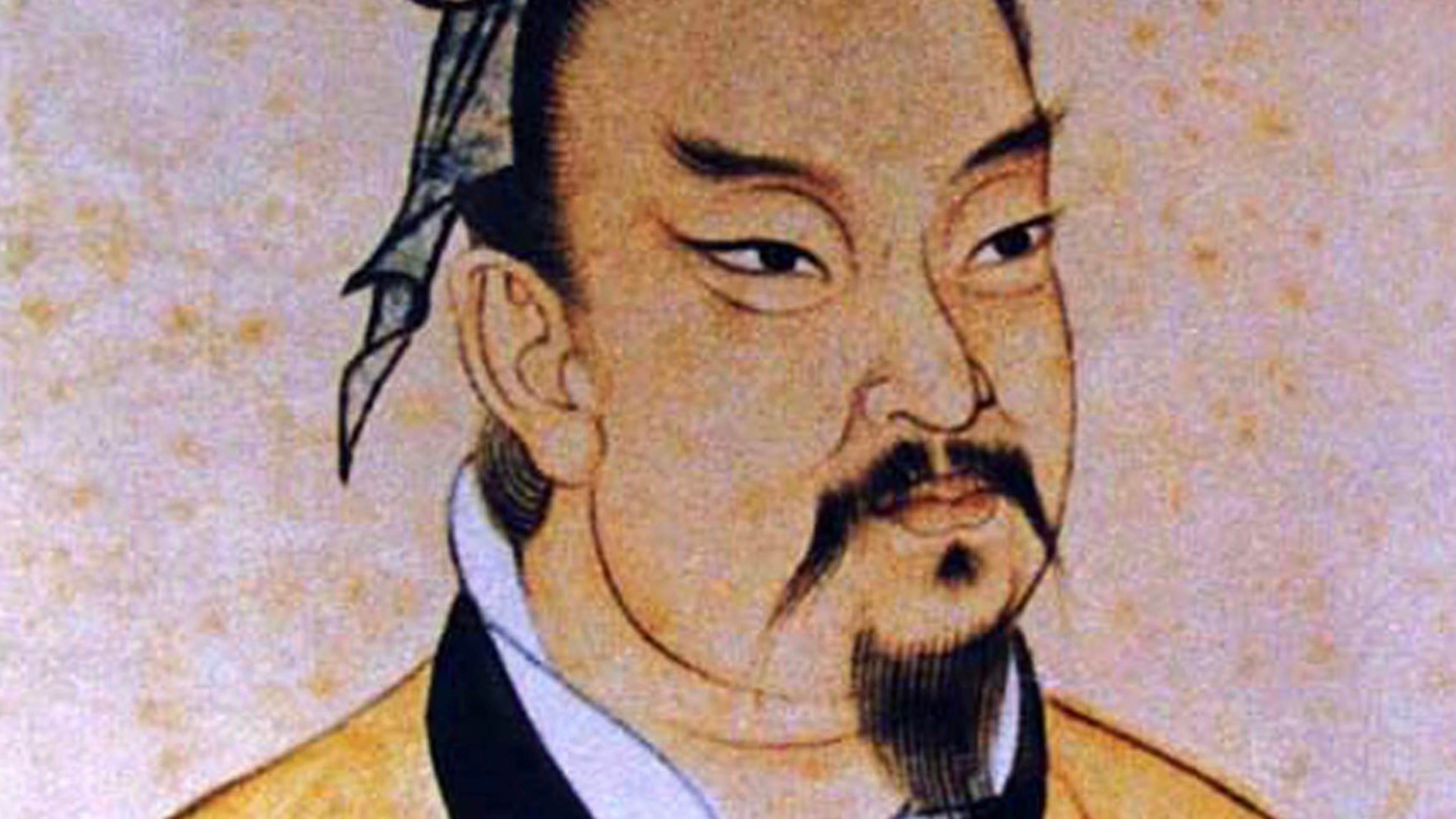
These classics are imbibed by most of China’s political and military elite. In the case of Sun Tzu’s ‘Art of War’, the scholarship generally concludes that it was written sometime in the warring states period in China’s pre-imperial history [475BC to 221 BC] and represented a military guide to a number of China’s contending kingdoms – before the Kingdom of Qin finally prevailed in 221 BC, thereby establishing China’s first unified empire under Emperor Qin Shihuang.
When I addressed the Sun Tzu Conference in Qingdao nearly ten years ago, just after leaving the office of Prime Minister in Australia, I spent time, in particular, emphasising Chapter 1, Verse 1, of the ‘Art of War’, which states:
“War is of vital importance to the state. It is a matter of life and death. A road either to safety or to ruin. Hence it is a subject of enquiry that can on no account be neglected.”
Last weekend, when preparing for this lecture, I looked back at my 2014 text and saw that I spent much of the time analysing the core elements of the ‘Art of War’, including such classical Chinese precepts as the arts of feint and deception, as well as the ultimate desirability for political leaders and military commanders to “win without fighting”.
I was at pains to remind our Chinese audience that these precepts were no longer national secrets. I said they were now widely studied across the western academy. They therefore had entered the realm of universal military art and science, in the traditions of both Machiavelli and von Clausewitz in the West.
I nonetheless concluded my remarks to that Qingdao Conference by underlining one of the lesser-known conclusions from Sun Tzu’s ancient text.
Quoting from Sun Tzu Chapter 12, Verses 21-22, it states that:
“But a kingdom that has once been destroyed can never come again into being, nor can the dead ever be brought back to life…hence the enlightened ruler is heedful, and a good general full of caution. This is the way to keep a country in peace and an army intact.”
In other words, Classical Chinese strategic thought tends to exhort caution rather than reckless risk.
These are sobering reflections from the ancient sage, both for Chinese and American audiences, as we approach the great subject of today, which is the future of the United States, China, and Taiwan.
Purpose of the Lecture
Ten years after making those remarks in Qingdao, the year after Xi Jinping had come to power, we are now well into the second decade of Xi’s rule.
We now confront much starker strategic circumstances than we did back then, although if we look back, there were already emerging trend lines.
Today, we are confronted afresh with the great questions of history: namely how to prevent a war which none of us want and, how to fight such a war if indeed we must.
And in our examination of deterrence, these are opposite sides of the same coin.
Today, I’d like to address what I judge to be the central question of our time. Namely, how do we deter Xi Jinping from undertaking unilateral military action against Taiwan.
I want to discuss what we mean by deterrence as a concept, both as defined in the US literature as well as articulated through our own doctrinal statements in Australia.
Second, I want to describe what I see in China’s contemporary literature concerning its own strategy for the future of Taiwan.
Third, I’d like to discuss what integrated deterrence actually means in relation to Taiwan, if in reality and not just in theory we are going to be successful in deterring what would otherwise be a war of truly catastrophic proportions between the world’s two largest economies and militaries, and one with unknowable geostrategic, geoeconomic and geopolitical consequences for the rest of the century.
In doing so, my disclaimer is that these are very much my own views as a China analyst, rather than necessarily reflecting those of the official position of the Australian Government.
Understanding the Concept of Deterrence and Integrated Deterrence
The single most significant development in recent times in terms of overall US strategy towards China has, in my view, been the US National Security Strategy of November 2017.
You will recall that this was when the US formerly replaced a doctrine of strategic engagement with one of strategic competition as the central organising principle governing its overall relationship with the PRC.
In many respects, this represented a belated recognition of the underlying nature of the US-China relationship as it evolved since the earliest days of Xi Jinping.
Certainly, that is the realist prism through which China views the US relationship, irrespective of the sunny, declaratory language that China may prefer to use to describe the relationship.
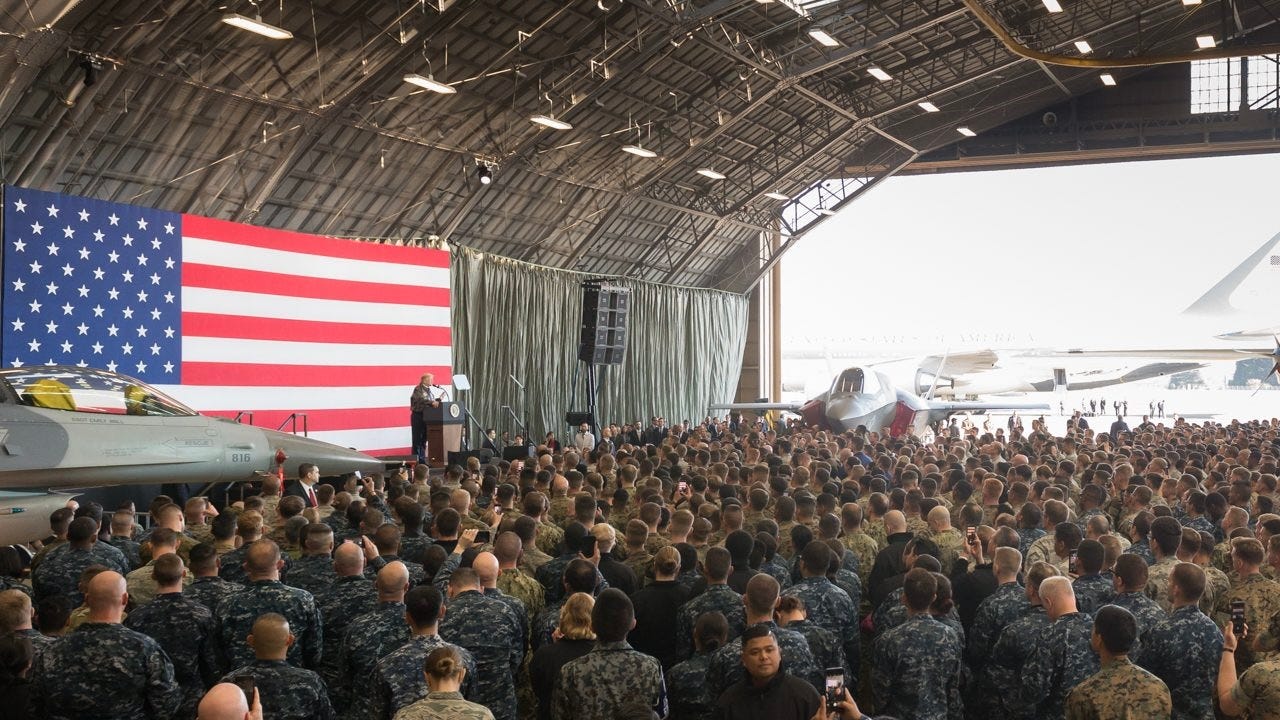
Indeed, strategic competition is very much the substance of the relationship when we carefully observe China’s operational behaviour across most policy domains over the better part of a decade.
What is remarkable about the 2017 document is the fact that it has now been embraced on a bipartisan basis, and across multiple US strategic policy documents in the nearly seven years since then, thereby providing a remarkable degree of strategic continuity, notwithstanding the significant changes and continuing partisan debates within US politics.
Within this frame of strategic competition, the US, through the national security and defence strategies of both the Trump and Biden Administrations, has also embraced fully the concept of deterrence as the principal mechanism to prevent war with the PRC over Taiwan, which successive documents have now described as “the US pacing challenge”.
Under the Biden Administration, we also saw the introduction of the concept of integrated deterrence through the 2022 National Defence Strategy. This document outlined the broad conceptual content of this idea across all military domains, non-military domains, as well as the full spectrum of potential conflict across peacetime, grey-zone, and up to and including direct, kinetic engagement.
It is to this concept of integrated deterrence as it relates to China and Taiwan that I will return later in this lecture.
Australian Strategic and Foreign Policy Doctrine
Deterrence is also a concept readily embraced across Australian strategic, defence and foreign policy doctrine.
In the Australian Defence Strategic Review of November 2023, deterrence is defined as compelling an actor to defer or abandon a planned strategy or activity by having in place steps or responses to change its risk assessment, and therefore its decision-making.
The document states that deterrence can be achieved through raising the costs or reducing the benefits to an adversary through denial or dissuasion or punishment.
Importantly, it acknowledges that deterrence exists in the “state of mind” of a would-be adversary, thereby making the credibility of deterrence especially important if it is to have any prospect of actually changing real behaviour by a would-be adversary.
The Defence Strategic Review is also clear in the breadth of deterrence across five domains: maritime, land, air, cyber and space.
Furthermore, it underlines the fact that such a deterrent effort requires a “whole of government framework” and relies, in turn, on harnessing all elements of national power.
Speaking at the ANU National Security College Conference earlier this week, the Australian Foreign Minister spoke about the need to deploy Australian national power to ensure that the perceived costs and risks of an adversary are greater than any perceived benefit.
She made clear that this requires not just an ability for Australia to be able to defend itself and have the resolve to do so, but more broadly, to have the national resilience necessary to withstand, endure and recover from any significant external disruption, thereby making Australia a harder target and less susceptible to various forms of coercion.
The Foreign Minister also made plain that without credible military capability, the efficacy of diplomacy is invariably diminished. Diplomacy plays an important role in framing the calculus each country faces. Diplomacy signals intent, and even red lines.
Australia’s new concept of National Defence, outlined in the forthcoming inaugural National Defence Strategy, argues that as we seek to maintain peace in our region, our nation’s front line is diplomacy.
What the Minister said earlier this year also made clear that while Australia worked towards maintaining the conditions of peace through diplomacy, we also play our part in “transparent, collective deterrence of aggression”.
The Minister noted that across the region “we see military powers expanding” and that Australia had a responsibility to “change the calculus of any potential aggressor so that no state concludes that the benefits of conflict outweigh the risks”.
The Foreign Minister has made plain that “our foreign and defence policies work together to make Australia’s contribution to the strategic balance of power that keeps the peace in our region” and that this was “a balance where strategic reassurance through diplomacy is underwritten by military deterrence”.
The Foreign Minister has also observed “that our foreign and defence policies are two essential and interdependent parts” of Australian influence in the region and the world, and that together “they make it harder for states to coerce other states against their interests through force or the threatened use of force”.
She stated that “combined, our foreign and defence policies contribute to the strategic balance of power that keeps peace in our wider region”, noting earlier statements by the Australian Defence Minister and Deputy Prime Minister that “deterrence is not an alternative to cooperation, because they are in fact mutually reinforcing”.
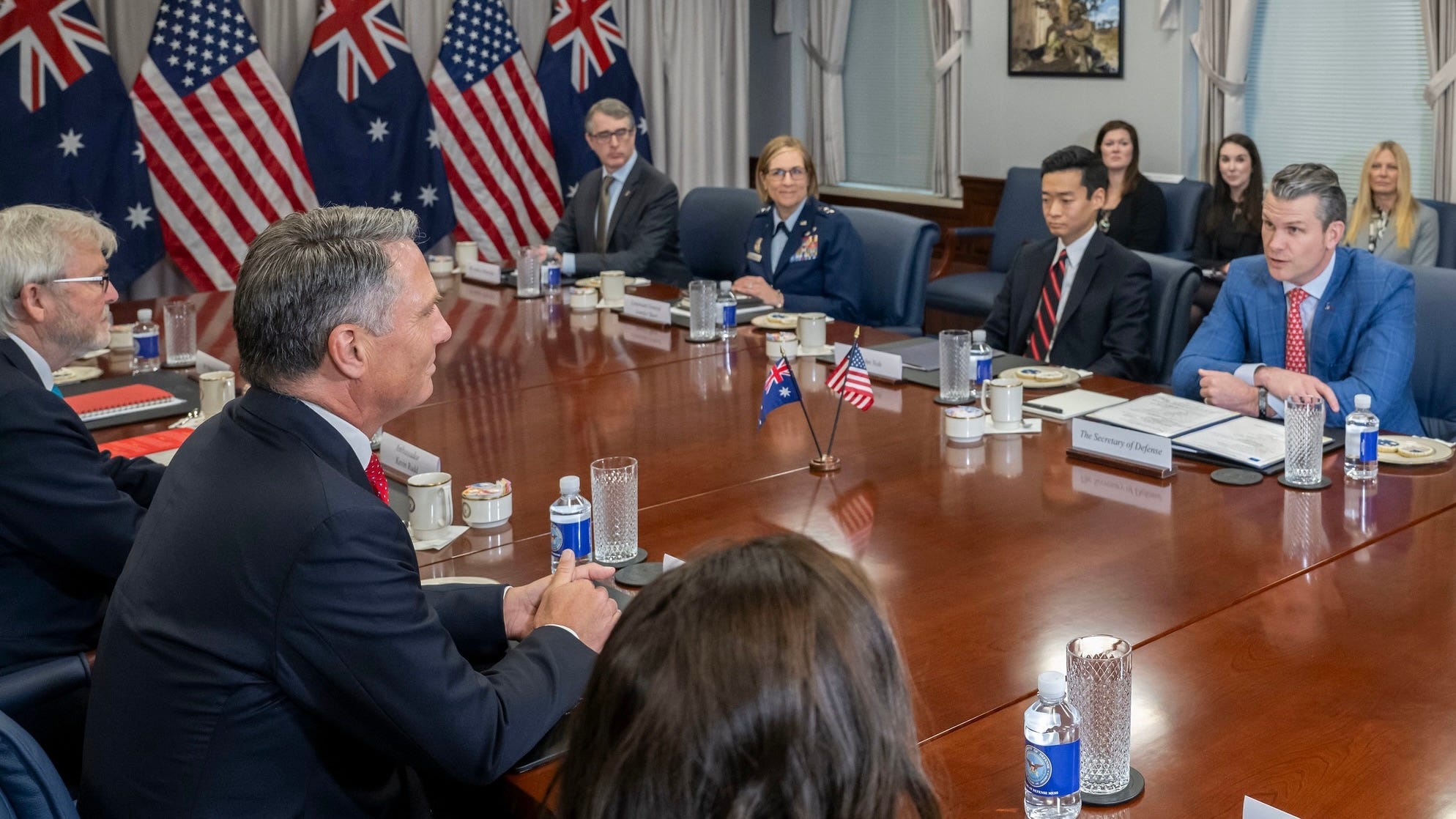
On the wider Indo-Pacific region, the Foreign Minister has said that “countries want a region that is peaceful and stable, and that means sufficient balance to deter aggression and coercion, a balance to which more players – including Australia – must contribute if it is to be durable”.
To this, our Deputy Prime Minister and Defence Minister has added that in the Indo-Pacific, “Australia will need to contribute to a more effective balance of power to avoid a catastrophic failure of deterrence”.
On the specific question of China and Taiwan, the Foreign Minister has been equally explicit:
“A war over Taiwan would be catastrophic for all. We know that there would be no real winners. And we know that maintaining the status quo is comprehensively superior to any alternative. It will be challenging, requiring both reassurance and deterrence, but it is the proposition most capable of averting conflict and enabling the region to live in peace and prosperity”.
In terms of reassurance, I believe this is primarily about three things.
The first is being clear-cut in our communications with Beijing that neither the US nor its allies have any interest in overturning the Chinese political system, given that China’s governance is entirely a matter for the Chinese people themselves – although this will never cause us to resile from our view on universal human rights norms as anchored in existing multilateral covenants to which China too is a signatory.
Second, that neither the US nor its Allies will support or condone, let alone encourage, a Taiwanese declaration of independence, but instead support the status quo.
And third, that mutual reassurance could be enhanced between the militaries of both sides through effectively operating guardrails, or what the Foreign Minister has described as preventive architecture, that would lessen the risk of crisis, conflict, and war by accident, arising from collisions between the naval and air assets from China, the US, and US allies in the region.
In summary, the Government of Australia has a realist, balanced, and well-developed concept of what deterrence means as an operational concept in Australian foreign and strategic policy, and in partnership with our friends and allies.
Chinese Strategic Intentions
Chinese strategic intentions in relation to the Indo-Pacific are best encapsulated in Xi Jinping’s concept of the great rejuvenation of the Chinese nation.
This is not only a concept which deals with China becoming a global economic superpower.
It is also about China being a military superpower, armed with a “world-class military”.
Furthermore, it is about China successfully reclaiming what it perceives to be its lost territories across multiple borders – including Taiwan, the Senkaku-Diaoyudao islands in the East China Sea, its maritime claims in the South China Sea, and its land claims along the Sino-Indian border, including the Indian province of Arunachal Pradesh.
Specifically on Taiwan, it has been made plain through Xi’s statements that national reunification must be achieved by the time China’s national rejuvenation is to be complete, namely 2049, the centenary of the establishment of the People’s Republic of China.
Even on this most expansive of measures, we are therefore now within the last 25-years of this timetable, and if a relatively low-cost opportunity arose, Xi could be minded to seek to secure Taiwan’s return within his own political tenure.
This is one of the reasons why the decade ahead looms as what I call “the decade of living dangerously”.
Of course, there have been multiple efforts to secure Taiwan’s return in the past, including through various Taiwan Straits crises during the 1950s and 1960s.
However, under Xi Jinping, a number of measures have been undertaken in order to enhance China’s military capacity to achieve its political objectives.
As this Conference will be well aware, Xi Jinping in 2015 launched the single largest internal reform that the PLA has seen in its long history, including the reduction of the number of Chinese military regions from seven to five, the establishment of joint command structures within each of these military regions, and the operationalisation of what Xi describes as “fully informationised warfare” – all in order to achieve Xi’s overriding objective for military reform, namely to have a PLA that is capable of “fighting and winning wars”.
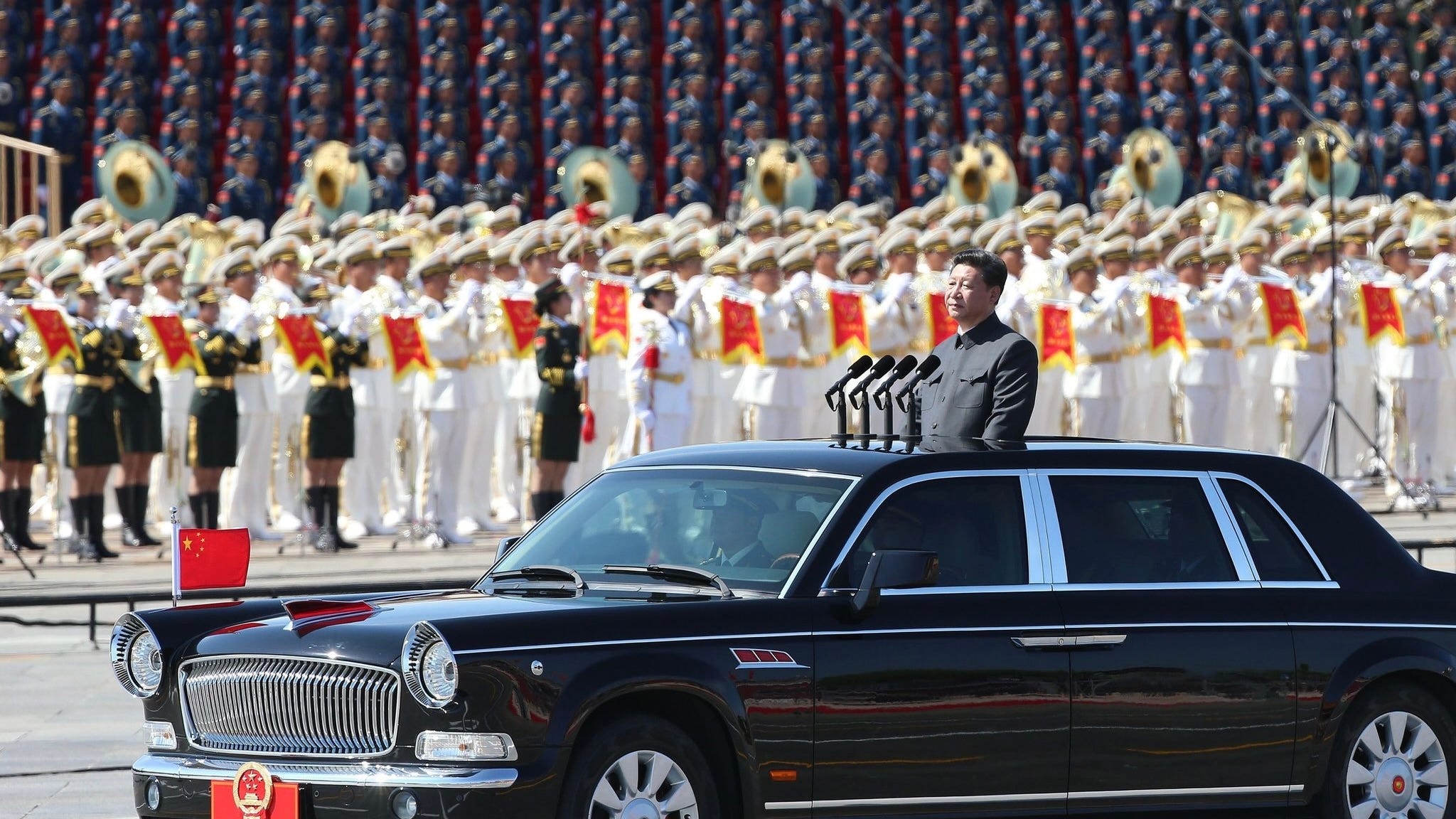
We have also seen Xi Jinping’s determination to create a military that is politically loyal, and one that is “capable of fighting and winning wars” through his rolling anti-corruption campaign across the PLA, including multiple purges across its most senior leadership structure.
The pattern of China’s military expenditure growth under Xi Jinping is clear.
Similarly, the pattern of China’s expanding range of military capabilities, including a new range of offensive capabilities, whose central organising principle is to create an integrated force capable of securing Taiwan by force.
Of course, there are other mission statements for which the PLA may be called upon – not just in relation to the South China Sea, the East China Sea and the Sino-Indian border, but also in the expansion of China’s global network of military, naval and air bases across the Indo-Pacific and, prospectively, beyond.
Beyond rising military budgets and expanded capabilities, we have also seen the steady evolution of Chinese military exercises in a manner which, particularly in the post-Pelosi visit environment, are increasingly designed to probe, rehearse and test a range of military scenarios whose central objective remains securing Taiwan by force, once the external strategic circumstances are maximally propitious in the accommodation of that objective.
Therefore, it is clear from the series of doctrinal statements and behavioural changes on behalf of the PRC leadership and its operational deployments across the region, that China’s strategic intentionality concerning Taiwan remains unchanged.
Of course, we have all been pleased to note recent efforts at stabilising the US-China relationship, most recently brought about by the summit meeting between President Biden and Xi Jinping in San Francisco last November, and in the two leaders most recent extensive video summit which sought to “sustain the spirit of San Francisco”.
Stabilisation is welcome. Bringing the geo-political temperature down several notches is equally welcome. So is the reopening of channels for high-level communication.
From China’s perspective, stabilisation is also useful as it seeks to deal with a range of other domestic and foreign policy challenges on its plate.
These include the overwhelming challenge of rebuilding Chinese economic growth given the failure of growth to recover in the post-pandemic period.
Furthermore, there is plainly a realization across the Chinese leadership that in its foreign policy, half a decade of wolf-warrior diplomacy has won more enemies for China than it has won friends, let alone won those who have been subject to various forms of economic coercion.
Whatever Beijing’s motivations may be, a stabilisation of the US-China relationship, in order to create a more benign foreign policy and strategic policy environment, is of benefit to both sides given the underlying and continuing fraught nature of the military relationship.
As for the military itself, it has also been welcome to see the resuscitation of military-to-military links between various levels of the Chinese and US command structure.
Nonetheless, it remains to be seen whether this thawing in the mil-to-mil relationship translates into more effective, theatre-level command-to-command communication links capable of reducing the risk of collision between military assets, and in managing escalation/de-escalation scenarios that would most likely unfold in the event of such a collision.
We need, however, to be deeply sober about the fact that notwithstanding the period of stabilisation which we have now entered in the US-China relationship, that there is nothing in our analysis which suggests that China’s strategic intentions in relation to Taiwan, nor its military preparations for achieving that objective by force, have in any way changed.
In fact, they continue apace.
Xi Jinping, in some respects, sought to communicate the difference between Chinese tactical and strategic change in his own important article on what he called “the Six Major Relationships” delivered through the party’s theoretical journal delivered last September.
The thrust of this article, delivered on the eve of the San Francisco stabilisation summit, was to make plain to CCP elites that in the pursuit of strategic objectives, certain tactical adjustments would always need to be made.
While Xi made no explicit reference in this particular article to US-China relations let alone Taiwan, from an analytical perspective, it is significant that Xi, at this stage of the process, sought to make the distinction between strategy and tactics abundantly clear.
Credible, Integrated Deterrence as it Relates to the US, China, and Taiwan
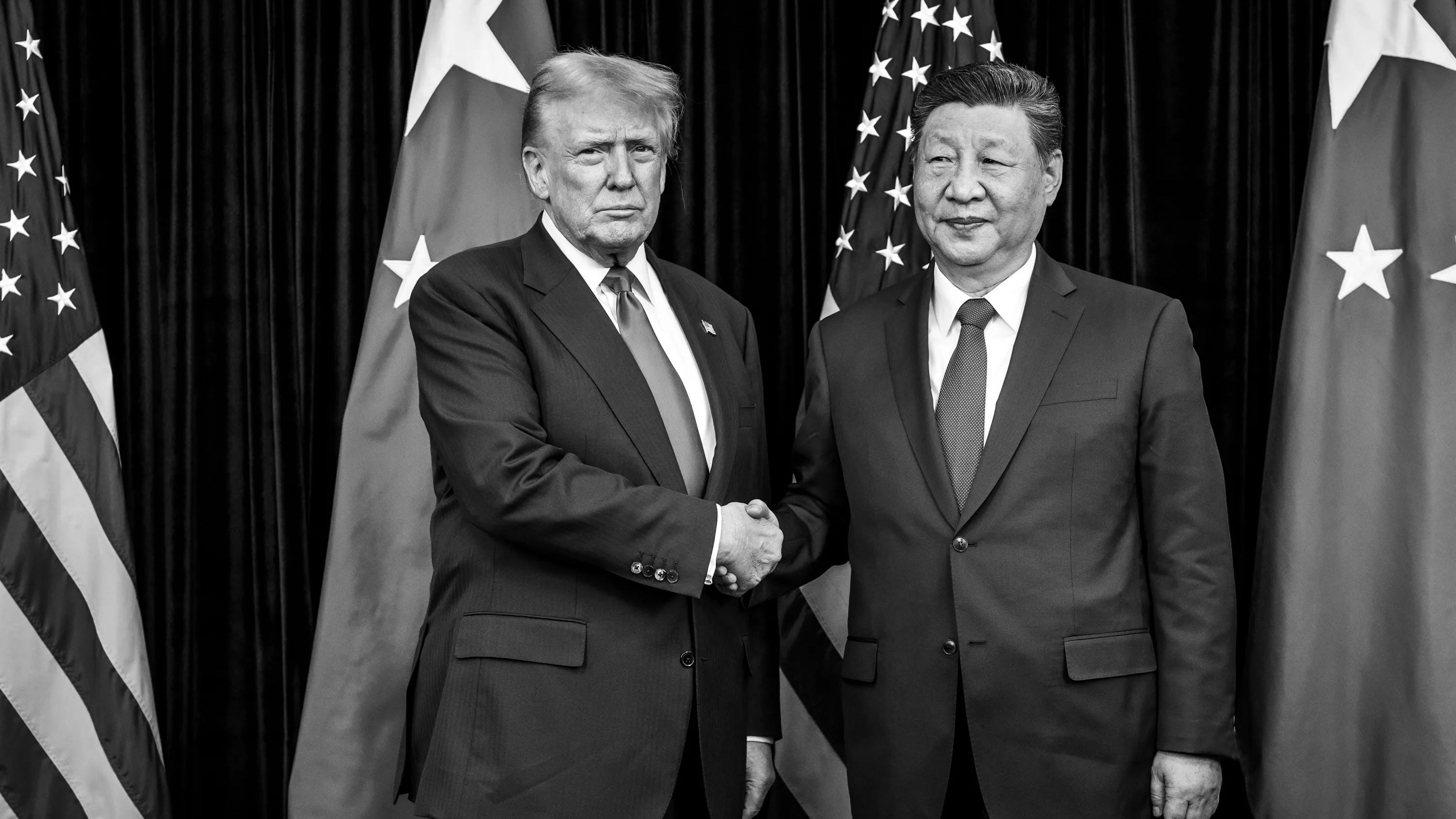
This raises the question that if China’s strategic intentions remain unchanged, what therefore constitutes credible deterrence, or to use the US term, “integrated deterrence” in causing Xi Jinping to conclude that it is still too risky to embark upon unilateral military action against Taiwan?
The complexity of this challenge is compounded when we contemplate the vast range of scenarios which could ensue in relation to Chinese military and paramilitary actions against Taiwan.
This includes intensifying grey-zone activities of the type we are witnessing at present around Jinmen; speculation concerning future possible blockades of Taiwan itself; as well as the ultimate scenario of a fully-fledged amphibious and/or airborne invasion.
Of course, there are multiple sub-scenarios associated with the above, including possible military annexation of small, individual islands currently occupied by Taiwan, but not lying far off the Chinese mainland.
We have seen something of this at work in terms of recent incidents in and around the Taiwanese island of Jinmen and the intervention of the Taiwanese coast guard and the type of Chinese countermeasures subsequently adopted.
The reality is that integrated deterrence is not simply about deterring a Chinese invasion of the island.
It is about deterrence as it relates to the full range of scenarios described above.
And in contemplating what the constituent elements of integrated deterrence might look like, it is important that we seek to analyse it not in terms of what we might see as a rational deterrent action, but how in fact these actions are viewed through the lens of China’s military, political and, most importantly, party culture.
Strategic Reassurance
The first component of effective integrated deterrence, at least in my argument, could best be described as ‘strategic reassurance’.
I have referred to this earlier in my remarks. It is one of the reasons why it figures so prominently in the public political language of our Foreign Minister.
This goes to the fundamental Chinese lens being placed on all deterrent actions by the US and its allies.
We all know that the Chinese view our collective actions as part of a carefully integrated doctrine of containment rather than deterrence.
Just as we all know that that particular Chinese strategic conclusion is wrong. Had the US and the West been engaged in the containment of China over the last 25 years, none of us would ever have allowed China to join the World Trade Organization, nor would we have allowed such a comprehensive web of trade, investment, capital and technology market engagements between China, the US, its allies and across the rest of the free world.
If indeed the US had adopted a strategy of containment against China [as Kennan, the architect of containment against the Soviet Union, defined it], there would have been zero economic engagement at all, and that would not have been limited to the domain of militarily applicable technologies.
This does, however, bring us back to the question of Chinese strategic perceptions.
Leaving containment to one side, the two sets of Chinese perceptions which we need to constantly bear in mind are Beijing’s views concerning US, allied and other efforts to overturn the Chinese state and our underlying intentionality concerning the future political status of Taiwan.
On the first of these, I know of no US administration since Nixon which has had the faintest interest in overturning the Communist administration that the CCP achieved through armed revolution in 1949.
The position of the US, and of all allied governments around the world, is that China’s future domestic governance is a matter for the Chinese people themselves.
Therefore, it is important in the business of strategic reassurance, we make that plain on a continuing basis to the Chinese leadership, given the latter’s preoccupation with the colour revolution phenomenon across former Communist Europe over the last 30-years, as well as its own enduring political and strategic nightmare – namely what occurred with the collapse of the Soviet Union and the CPSU in 1991.
The second and, I think, most important element of strategic assurance lies in the future political status of Taiwan itself.
Without in this speech entering into a complex discussion on the various theological interpretations of the three communiques agreed between China and the US in 1972, 1979, and 1982, the bottom line is that the US and its allies, both from what they say and what they do, must continue to reinforce the fact that under no circumstances do we support Taiwanese independence.
For the Chinese, this has long been a redline.
And for those reasons, we need to continue to acknowledge its salience in Chinese strategic and political thinking. Most importantly, we need to do so in relation to our dealings with the Taiwanese Government. Those of us who have followed the ebbs and flows of these debates since democratisation of Taiwan in the 1990s will understand how difficult this can be.
And with the impending inauguration of William Lai as DPP President of Taiwan next month, we will need to be doubly mindful in our dealings with Taipei so that the policy of the Taiwanese Government and the DPP remains committed to maintaining the status quo, and not to disrupt that status quo by any form of unilateral declaration of Taiwanese independence.
This level of strategic reassurance is fundamental from Beijing’s perspective.
US Political Resolve
A second element of an effective integrated deterrence towards China over Taiwan will lie not in the US military, but will lie in Chinese perceptions of the level of US political resolve to deploy its military in a crisis.
In this room, you will be familiar with the rolling CCP critique of the rise of the East and the decline of the West.
You will also see successive Chinese analyses of what they perceive to be the growing political divisions in this country and the growing levels of economic division and social fracture.
For these reasons, therefore, how the CCP leadership analyses US political resolve over the decade to come, will be one of the most critical components of the overall deterrence equation.
This will be particularly important when Beijing analyses the question of future US political resolve over Taiwan through the prism of what the US does in the future in relation to Ukraine and Russia.
Leading Edge Military Capabilities
The third, and arguably most critical component of the overall integrated deterrence equation, lies with the US military itself.
The conventional wisdom within the CCP over many years, has been that US power in the world rests on three premises: the power of the US military; the power of the US dollar; and the power of US technology.
I see little evidence that this traditional Chinese assessment of US strengths has in any way changed.
At the same time, I see integrated efforts being directed by the CCP against all three of these American core strengths through various instruments of Chinese strategy.
For the US military, and for the Congress which funds it, the challenge and the opportunity remains clear: to continue to maintain a strategic edge across all military technology platforms, across all five domains of land, sea, air, cyber, and space, in order to continue to create sufficient doubt on the part of CCP military planners about their ability to prevail in the battle space if they were to launch an action against Taiwan.
In this context, the CCP has long sought to understand the US military, including its patterns of operational planning and behaviour, in a manner which is able to be presented to its political leadership as a known and static equation.
Without intruding into the professional space of those engaged in the hard-edged business of deterrence in this room, the challenge for the US, within the framework of strategic predictability, is nonetheless to provide not static deterrence, but dynamic deterrence, in order to cause our Chinese friends to constantly be in the business of having to adjust their overall strategic calculus and advice to their own system.
Chinese strategic thinking always prefers to have a known adversary who they know will behave in a known fashion, deploying known military platforms.
There is a fine balance, therefore, to be struck between the strategic predictability of US responses to Chinese actions on the one hand, while doing so in a manner which constantly presents the PLA with a range of challenging, new concerns on how that response is delivered on the ground.
Economic Deterrence
A fourth element of integrated deterrence lies in the economic domain – which Australia’s Foreign Minister also detailed earlier this week. This is not just about trade, restrictions to trade, or the prospect of limited or comprehensive trade sanctions against China under given scenarios.
It is also about foreign direct investment. It is also about China’s access to capital markets. And, most importantly, it is about China’s continued access to US and allied technology markets.
This is not simply a debate about semiconductors, which very much constitute the engine room of the unfolding technology revolution.
It is most acutely about the future application of artificial intelligence to a range of civilian and military platforms, as China seeks to leverage AI to achieve a quantum shift in its relative technology advantage against the US and its allies.
This, arguably, is the most complex domain of all in constructing the overall dynamics of an effective deterrence.
Significantly, when Xi Jinping recently recommended to President Biden that AI be included in a specific US/China dialogue, in addition to the resumption of mil-mil dialogues across the board, it indicates a level of Chinese strategic anxiety about which of the two countries possesses the leading edge in AI, whether any rules of the road might be possible in relation to military applications, and what other possibilities may exist.
Economic Resilience
A fifth and related component of integrated deterrence, of course, lies in economic resilience. This applies not just to the US.
It also applies to US allies across the world.
This brings us directly into the terrain of the security of supply chains – whether it is in critical minerals, advanced technologies and other forms of essential economic resilience.
In our understanding of this part of the deterrence equation, economic resilience applies most particularly to the island of Taiwan itself.
The question which needs to be answered is how resilient would Taiwan be under a series of Chinese military scenarios, and what this means in terms of Taiwan enhancing its own resilience against those contingencies.
The Role of Foreign Policy in Deterrence
Another element of integrated deterrence lies in foreign policy. This goes to the actual consequences for Taiwan, the region and the world in the event of China launching a military attack on the island and the outbreak of war.
The loss of life on Taiwan itself (a densely populated island about half the size of Tasmania, but with some 23 million people on it) would be impossible to predict.
The impact on the global economy would be unprecedented as all economic engagement between the world’s first, third (EU), and fourth (Japan) largest economies, and China (the world’s second largest), ground to a halt.
Trade and investment flows with the rest of the world would also be undermined.
Global investor confidence would collapse.
International capital markets would likely seize up.
One Bloomberg calculation of the economic cost of war over the Taiwan straits looms at more than 10 trillion dollars.
Sometimes our minds are numbed by figures of this order of magnitude. But to be plain, a $10 trillion economic cost would equal 10 percent of global GDP.
Not only would the global economy be thrown into recession, we should also anticipate it triggering a global depression.
The Australian Foreign Minister noted this week that economic integration provides a critical incentive for peace as regional economies share the benefits of prosperity.
For these reasons, it is important that the region and the world-at-large understand that they have a collective responsibility to reflect to the Chinese leadership that the launching of unilateral military action against Taiwan, which would carry with it the inevitable risk of crisis, conflict and war, would also pose an unspeakable human and economic cost to the world-at-large, and therefore should be avoided at all costs.
Beyond that, the long-term strategic consequences of such a war, however it was ultimately resolved, are impossible to predict.
The Role of Friends, Partners, and Allies in the Overall Deterrence Equation
One final component of integrated deterrence involves the role of US friends, allies, and partners around the world.
As noted earlier in my remarks, deterrence is not simply a burden to be shared by the US itself.
It is a collective burden.
Therefore, we need to be clear about what, across the various arms of integrated deterrence, can legitimately be expected of other countries as we seek to avoid the catastrophe of war across the Taiwan Straits.
The voice of the Europeans, in this context, is of critical importance.
Just as is the voice of the Global South, given the consequences which would flow to them should there be such a radical rupture to the operation of the current international rules-based system.
Conclusion
Credible, effective, integrated deterrence therefore represents the most complex of challenges in US strategic policy.
However, my argument as a lifelong student of China, is that deterrence can prevail.
For those who are students of China during Xi Jinping’s first decade in office, we observe a style of rule vastly different from that under Deng Xiaoping, Jiang Zemin, and Hu Jintao.
Nor is this the China of the Mao years, despite the fact that Xi has, on many occasions, referred positively to the achievements of Mao Zedong.
Mao demonstrated throughout his political and military career that he was not just a risk-taker, but often a reckless risk-taker (look, for example, at his intervention in the Korean War in 1950, look also at the Cultural Revolution domestically).
We have seen some risky behaviours from the PRC in recent years, such as island reclamation in the South China Sea, as well as Beijing’s embrace of Vladimir Putin at the time of Putin’s invasion of Ukraine.
But these are calculated risks not reckless risk-taking, which is what we saw with Mao.
Beijing knows, therefore, what the consequences would be for the leadership of the CCP writ large were they to roll the dice on Taiwan only to incur failure on the battlefield.
The consequences for the leadership, the party and the country would be catastrophic – as they would be for the whole region.
In reaching its rolling calculus about the deliverability of China’s political and military objectives in relation to Taiwan, Beijing will also be aware of the cautionary tales alive within Sun Tzu’s ‘Art of War’.
And within that text, we should, once again, be seized of its opening lines:
“War is a great matter of states not to be taken lightly, because if you lose the war, you lose the state.”
This is a thoughtful essay, but I think the deeper question is not only how integrated deterrence should work. The deeper question is why the United States and its allies are so invested in organizing, managing, and preparing for a possible war over Taiwan in the first place.
The standard answer is democracy and freedom. But that explanation is too thin. If democracy were the real organizing principle, Western policy toward many other regions would look very different. The second answer is containing China. But containment has already become structurally less effective: China is now too large, too industrially embedded, and too connected to the Global South to be isolated in the old Cold War sense. The third answer is semiconductors. TSMC matters enormously, but a Taiwan war would likely destroy the very supply chain that Washington claims to protect.
So perhaps the real issue is not simply Taiwan itself, but the preservation of America’s strategic primacy in Asia. Taiwan is treated as a forward node in a larger regional architecture: military positioning, alliance discipline, technology control, sea-lane leverage, and the credibility of U.S. leadership. That is why the discussion often sounds less like the protection of 23 million people and more like the management of a strategic asset.
This is also why reassurance matters. If Beijing concludes that Taiwan is being converted into a permanent instrument for constraining China’s national development and regional position, then deterrence without reassurance becomes escalation management without political realism. The harder question is not whether war can be deterred. The harder question is whether Washington can accept that peace in the Taiwan Strait requires limiting its own use of Taiwan as a geopolitical instrument.
Kevin, brilliant China analysis as always, although I wonder whether much Western debate now overstates Chinese strategic coherence, while underestimating the economic and political fragility building beneath the surface of Xi’s China, particularly as many allies have grown more uncertain about America's own trajectory. Nevertheless, the US economy remains comparatively strong, and as policy momentum toward economic decoupling accelerates, the incentives for deterrence may weaken as well.
It underweights the fact that at 73, Xi himself, with no clear institutional successor, may have become the single greatest point of failure in the deterrence equation.